
Unlike before, Indian fine jewellery isn't just about centuries of tradition of snagging gold and heirloom diamonds anymore. There’s a good reason for this change, and it has just about everything to do with the Lab Grown Diamond Cost.
Buyers nowadays are faced with a much tougher decision. People aged between 22 to 45, such as young professionals and couples just starting their lives, have become the new target. They are willing to pay for a luxury, but need it to have some value.
Younger generations now realize the value of a diamond isn't just about where it comes from. All lab-grown diamonds win this new mathematical equation.
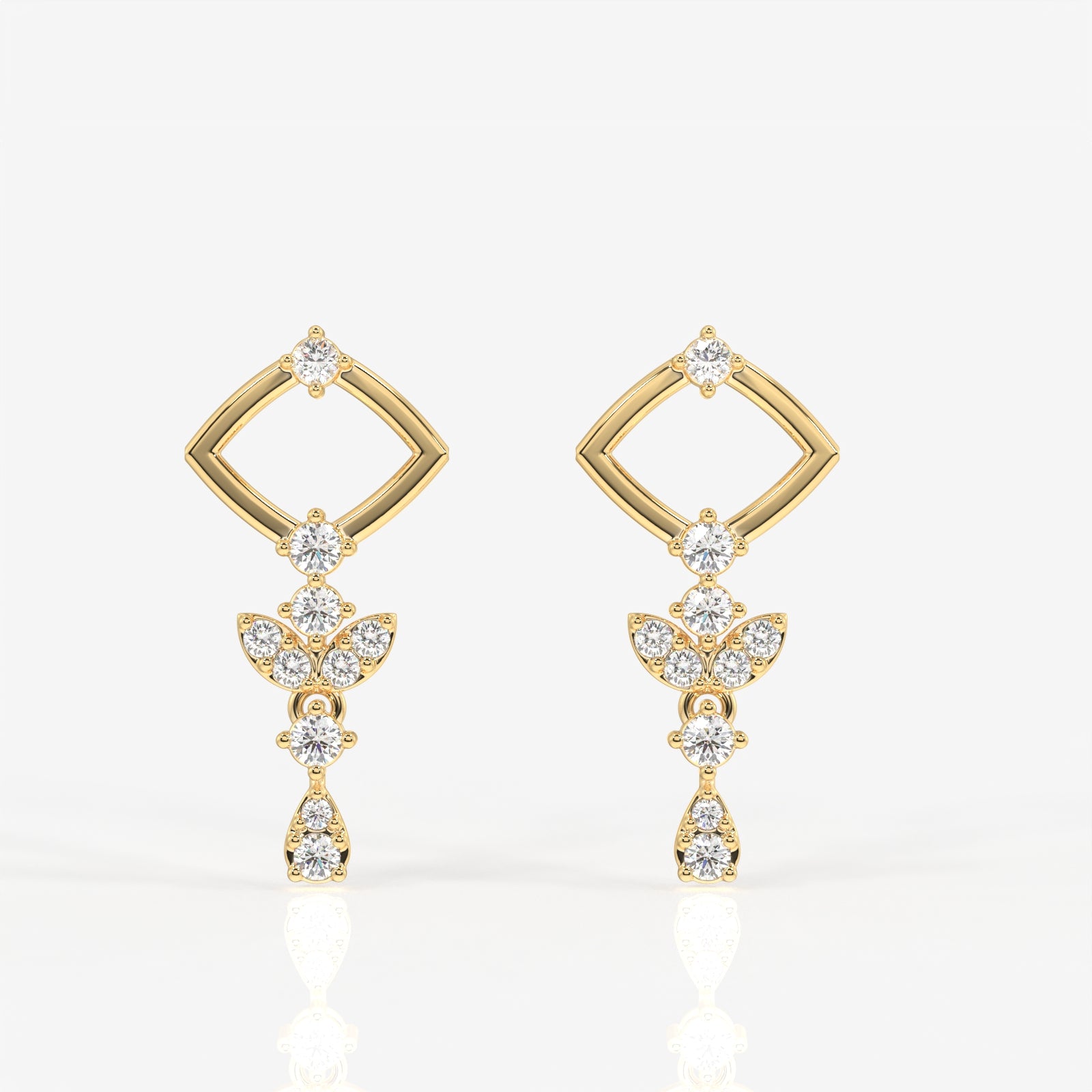
Before cost, there is a gleaming misconception that needs resolve. Lab-grown diamonds are not “fake,” “simulants,” or “American diamonds.” Those are materials like Cubic Zirconia (CZ) or Moissanite, which are constructed of entirely different chemical arrangements.
As far as the current situation is concerned, a lab-grown diamond is quite simply, a tangible diamond. Period.
It is chemically, physically, and optically the same as a diamond that originated from the depths of the earth. Their point of disparity is only in the origin. One is developed over a time span of billions of years and the other is synthesized within a matter of weeks in a laboratory, albeit under a highly controlled environment, using one of the two methods:
As such, lab-grown diamonds are regarded as real diamonds and are graded equally by the world-class gemmological laboratories like the GIA and IGI, using the same 4Cs which include Cut, Colour, Clarity, and Carat.
The most common question we hear is: "If they are the same, then why is the price of lab diamonds lower?" The answer has nothing to do with the quality of the product, but rather the quality of the journey it has to take to get to you.
The primary cost of a mined diamond is the sheer difficulty of its extraction. It takes multi-million-dollar scale operations to get the mining settled. In addition to this, there is also the extraction of a large number of labourers who sift through tons of earth for only a couple of carats. This price is placed due to the model of scarcity.
These lab-grown diamonds sit behind the entire, carbon heavy, mining process. They are made to order on a per diamond basis which removes the ‘scarcity’ condition that has governed diamond pricing for the past 100 years.
The supply chain of a mined diamond is extremely long and seldom visible. Starting with the mine, it goes to a sight holder, then a cutter of the diamonds, a polisher, a wholesaler, then distributed and finally, sold to a retailer. After each of these steps, a new price is added.
The lab-grown model is much simpler. After the diamond is lab-grown, it moves to the cutter and polisher, and straight to the D2C brand. This simplicity in the supply chain is one of the reason brands like Caratbazaar provide premium quality products without overselling them like traditional jewelers.